Wednesday, April 25, 2012

George F. Bass


Texas A&M Distinguished Professor Emeritus of Nautical Archaeology and founder of the Institute of Nautical Archaeology, George F. Bass, has been elected a 2012 fellow of the American Academy of Arts and Sciences, a prestigious honorary society and a leading center for independent policy research.
In his more than 30 years of research and teaching, Bass made many noteworthy contributions to the field. He began diving in 1960, and that same year he became the first person to excavate an ancient shipwreck in its entirety on the sea bed. At the end of the excavation, Bass established a museum of underwater archaeology in the Bodrum castle in Turkey, which is now one of the most popular attractions in Bodrum. He has since excavated a number of shipwreck sites ranging from the Bronze Age through the eleventh century. He has also directed or assisted with prehistoric terrestrial excavations in Greece, Turkey, and Italy.

Throughout the years, Bass has written ten books including Serce Limani and Yassi Ada and has also received many awards and accolades for his preeminent achievements. He has been awarded the Archaeological Institute of America's Gold Medal for Distinguished Archaeological Achievement, the Historical Diving Society’s Pioneer Award, an Explorers Club Lowell Thomas Award, a National Geographic Society La Gorce Gold Medal as well as the Society's Centennial Award, the J.C. Harrington Medal from The Society for Historical Archaeology, and honorary doctorates from Bogaziçi University in Istanbul and the University of Liverpool. In 2002 President George W. Bush presented him with the National Medal of Science.

Tuesday, April 24, 2012

2012 Distinguished Achievement Awards

COLLEGE STATION— This year Texas A&M University and The Association of Former Students have selected 24 outstanding members of the university's faculty and staff to be honored with the 2012 Distinguished Achievement Award. In recognition of their achievements, each recipient will receive a cash gift, an engraved watch and a commemorative plaque.

The Texas A&M University Press would like to congratulate Michael Waters, author of Clovis Lithic Technology and Lone Star Stalag as well as Press Faculty Advisory Board member Barbara Gastel for their receipt of the Distinguished Achievement Award.

Michael Waters is a professor of anthropology and geography at Texas A&M University and director of A&M’s Center for the Study of the First Americans.

Barbara Gastel, a physician specializing in biomedical writing and editing, is professor of integrative biosciences, humanities in medicine and biotechnology at Texas A&M University, where she coordinates the master's degree programs in science and technology journalism.

Sunday, April 22, 2012

Nature Bags and Sensory Activities

Getting children outdoors has value. Last week, I discussed the difference between structured (adults guiding children in activities) and unstructured (children making up play as they go) play. I also shared some ideas to try with children. This week, I will share some structured activity ideas to try with children: nature bags and sensory activities.
 
 
Nature Bags
Nature bags are tools that children can use when exploring outside. They consist of a bag and contents that will aid them in their exploration to encourage creativity, imaginative play, emotional connection to nature, physical activity and intellectual learning. We keep ours in the closet next to our coats and take them with us whenever we head outside as a family. See the list below to get you started in creating your own nature bag.

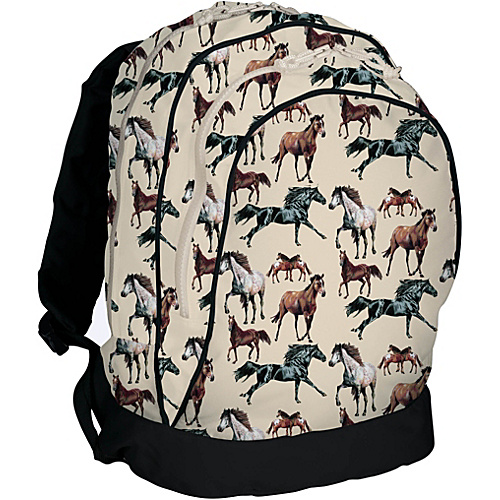
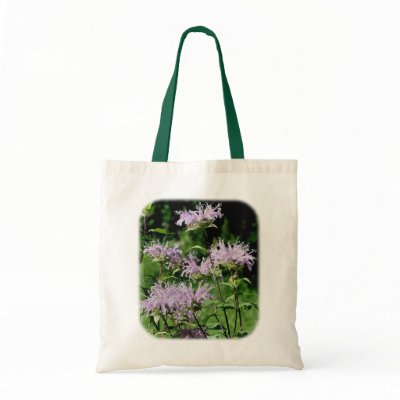
Bag Types. Bags with straps and zippers work best. We have used blank totes that kids have decorated to make more personal. They loved doing it and took more ownership of the bag and its contents!
 

Possible Contents. Included in this list are items that will help children look at things closely, measure, identify, collect, pick apart, view without touching, make rubbings of, draw or record. This is just to get you started. Feel free to add to the list as you learn what you need in your adventures. Keep in mind, however, that the bags should be light for little children to carry.

  • Magnifying glass
  • Field guide(s)
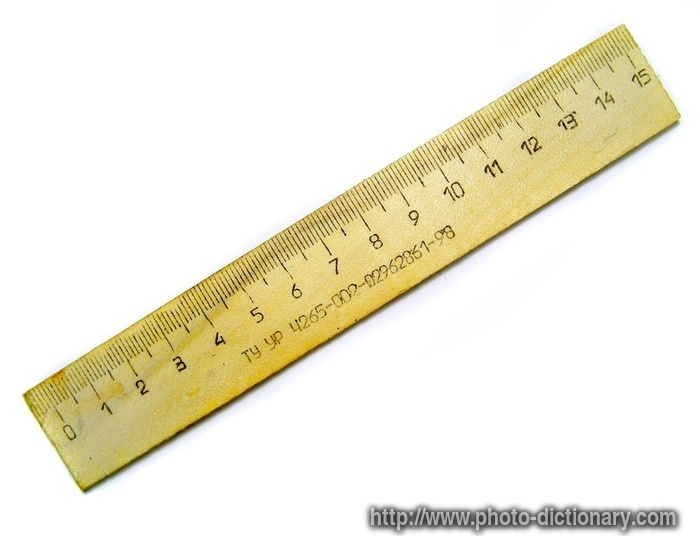
  • Ruler
  • Bandana
  • Mini clipoard
  • Metal probe and Tweezers (to pick apart objects)
  • Container with lid or Plastic bags
  • Peeled crayons
  • Pencil or Pen
  • Nature journal  


Preventing Fears. Sometimes children may have fears about being outside (adults, too!). It is important to address these fears and empower others with strategies to face their fears (i.e. If a child is fearful of bugs, they can carry the bug spray for the group. If the fear is getting hurt, they carry the band aids.). Then, the child can help if a strategy is needed. Here are some ideas of things that may be helpful tools to include in nature bags to face fears. However, they are good to have along in your bag even if the kids don’t have related fears.
  • First aid kit (injury)
  • Flashlight (darkness)
  • Whistle, map and compass (getting lost)
  • Toilet paper (bathroom)
  • Bug spray (bugs)
  • Water bottle (thirst)
  • Snacks (hunger)
  • Sunscreen (sunburn)
  • Sun hat or sunglasses (sun in eyes)
  • Warm layer and extra clothes (too cold or wet)
  • Rain coat and boots (weather)


Sensory Activities
We as people use the five senses (sight, smell, taste, touch and hearing) each day of our lives. Below are some ideas to do on a hike with children that involve using their senses. There is one activity for each sensory area. Animals also use their senses to survive. See if children can come up with an animal that uses a sense and what it helps them do in nature. After trying these, see if you can come up with some of your own activities together.

Sight. Gather 3-10 items from the surrounding area and place on ground. Examples might include a pinecone, wildflower, leaf, stick, etc. Cover them with a bandana. Tell children that they have 30 seconds to memorize the items. Uncover the items, count to 30 and cover them again. Then, allow children to go hunt for the items and bring them back. Share what they find and celebrate which ones they remembered using their sight.

Smell. Gather 4-6 film canisters with lids. Dip cotton balls in different scents (peppermint mouthwash, cinnamon, coffee, buttered popcorn, peanut butter, garlic powder, essential oils like orange or rose, etc.) and put inside the canister. Using a bandana, cover the eyes of the children. Then, hold the opened container under their nose. Tell them to take a deep breath, smelling through their nose. See if they can guess what scent is in each canister.

Taste. Place four items in a brown paper lunch bag or sack from home. The items should cover the different tastes (sweet, sour, salty and bitter). Examples might include a piece of chocolate, sour gummy worm, pretzel stick and lemon wedge. Using a bandana, cover the eyes of the children. Then, have them each grab one item from the bag and stick it into their mouth. See if they can taste if it is sweet, sour, salty or bitter and if they can identify the item without looking. It is always a good idea to choose items that your child is comfortable with or enjoys.

Touch. While hiking along the trail, pick up rocks that are the size of a child’s fist. Pick up enough so each child can have one. Then, have the children sit down in a circle. Place a bandana over the eyes of each child. When all eyes are covered, place one rock into each child’s hands. Tell them that this is their rock. Have them use their sense of touch to explore their rock and memorize what it feels like. Then, gather all of the rocks and place them in the center of the circle. Tell the children to take off their bandana. Their job is to find which rock belongs to them in the pile.

Sound. Gather 4-10 film canisters with lids. Pair containers so that each container will have one item inside that matches the item in a second container. Examples might include two containers with a paperclip inside, two with popcorn kernels, two with sand, two with ripped up tissue, two with coins, etc. Secure the lids on the containers and give them a shake. Each set has a unique sound. Then, pass the containers out to children. Have them shake their container and listen to the sound it makes. Their job is to find their partner in the group by shaking their canisters and using their listening skills. Their partner has a shaker that sounds just like theirs.

Time to give some of these ideas a try. Don’t feel like to you need to do all of them. One or two might be a good stretch for youngsters. Share your experiences with us in the comment section below. What have you done with children in the outdoors that was successful?

Some of the sensory activity ideas listed came from the book Small Wonders.

Things I learned in OT School

 As my coursework draws to a close (oh my, how did that happen?!), I wanted to share some key (tongue in cheek) things I've learned. Enjoy!

"If not you, then who?"

"Stroke it, don't poke it."

CVAs may cause emotional lability, but so do excessive group projects.

You can feel like a failure all semester and still pass the class.

"Practice makes permanent."

If you know activity analysis well enough, you can make most anything therapeutic.

"It depends."

"When in doubt, make it bigger and longer."

"The pelvis is your friend."

You know more than you think you do. (At least, I sure hope so!)

Friday, April 20, 2012

Messy, messy...

     This past week I decided to do a couple of experiments with the girls. You would think by now I would know that anything I decided to do with them would be messy, not just normal messy, but super messy as they take everything to the extreme!

     First on the list was an ivory soap cloud. Nothing too hard about this experiment, you take a bar of ivory soap and microwave it.  The air that is whipped into the soap expands creating a foam.  The results are quite dramatic.  I tried to microwave it for 3 minutes and had to stop at 1.5 minutes because I was overwhelmed by the smell.  But we had an impressive amount of foam which was much drier then anticipated. Bria described the texture as that of a paper towel.


       They found a little piece that was still soft, so I re-microwaved that part and got more foam.  Little did I know that while I was re-microwaving this little piece the girls were crumbling the rest into tiny little pieces.  Not only did they disintegrate all the foam they then decided to cover everything including themselves in it.  Luckily it was just soap and cleaned up fairly easily with a little water.


     Wednesday we had a visit from the Parents as Teachers lady, Ms. Rose. She evaluated Eli first (he scored high even on the 10 month evaluation), but after she had an activity for the girls. We put some water with food coloring in an ice cube tray and then used eye droppers to make drops on a coffee filter. Not too messy until Bria got a hold of it. She would drop entire droppers in the same place on the coffee filter allowing colored water to bleed through the paper towels. Luckily Ms. Rose had a vinyl tablecloth underneath. Cleaned that mess up, and then they tried to do the same on waxed paper to see the difference. Once again Bria got carried away with the water, and had huge puddles on her waxed paper. Lots of paper towels got that mess under control.


     After we had some quiet time we decided to do the milk experiment. You know the one with food coloring and dish soap. You take milk and put drops of liquid food coloring in it. Then you dip toothpicks in dish soap and dip it in the food coloring. The soap disrupts the surface tension creating large circles of color.  It only does that so long (especially in 2% milk); then it becomes a solid color mess.  The girls kept trying to add more color to it with no luck. So they just started stirring the colors in.  Between colors and stirring we ended up with green milk all over the table and floor!  They did seem to have a good time though.  Next time I will try it with whole milk; the extra fat should make it even more impressive.


     Thursday was regular check-ups for Eli (9 months) and Nadia (3.5 years). 3.5 years is not a "normal" check-up, but it was in place of her 3 year, so I can start taking them all in July next year and avoid flu season.  Nadia was very cooperative for the doctor, and checked out fine. Eli was crazy as always, but check out fine other then still being thin.  The doctor did tell me to continue pushing carbs and meat for Eli instead of fruits and veggies to try and help him gain. Not too hard to do since he loves them! The rest of the day we ran some errands, and I came home to a surprise, an ipad from Nathan! It is supposed to be a combination Mother's Day, Anniversary, and Birthday gift; I really think he just wanted one to play on too.

     The rest of the week was pretty uneventful although I did see a cute little monkey at work on Friday.  Nathan is headed back to St. Louis for work on Sunday, but we have different plans this time around!


Recess?

There was a recent study, a blogger for the LA Times notes, that found that many parents with children enrolled in child care do not take their child outdoors daily. It's actually interesting to me that they would look at this, because as a former preschool teacher, I know that: #1: in many places it's required for children in a formal setting to go outside everyday (barring, of course, bad weather), so the children are getting outside play time and #2: for teachers, being outside is often the hour or two of the day that restores sanity, since children have the freedom to move about and be as loud as they like. So children ARE still getting that outdoor play time (perhaps not in as natural of a setting as would be ideal, but still, they are outside!), even if parents are not the instigators.

This does stress the importance of recess and outdoor play at school, which AOTA emphasizes in the article Occupational Therapy Can Help Save Recess. Recess/active play is critical for helping children to focus better, besides all of the physical benefits!

Thursday, April 19, 2012

9 Months Old

     So this post comes a couple weeks late, but I wanted to wait until after Eli's 9 month appointment which was today! He weighs 16 lbs ( less then 3 %) and is 27.5 inches long ( 23 %).  The doctor is still a little concerned about his weight, but said, "He is a wild man; that may have something to do with the weight problem."  We kind of already knew that since he never stops moving!


     A couple days before he turned 9 months old, Eli started pulling himself up. Now he spends a lot of time on his feet cruising around furniture or just happy to be standing.  It is getting really hard to keep him out of anything!  

     Recently I moved the stairs on their slide down to his level, and he immediately climbed up them! He just likes to hang out at the top rather then slide down, but I know that will come.


     Another favorite of his is (and always has been) eating. He is done with purees and starting to eat a lot more "table" foods.  He still pretty much loves anything you give him with the exception of kiwis. If you aren't faster then him he will snatch things off you plate too!


     He loves getting a hold of anything of the girls, and if he is lucky he can catch a cat from time to time. It is looking like he is going to be the orneriest of the three (that's a scary thought)!  He is still definitely a mama's boy and loves to cuddle (with me at least). Although now that he is moving more he is also gaining some independence. That may mean attacking the at, unrolling the toilet paper, pulling lids out of a drawer, or trying to chew on one of his sisters' legs, but at least he is starting to find ways to entertain himself!