Friday, May 11, 2012


Seeing is believing

Spring is almost over, and one of wildlife’s most constant events has come for many species already: the birth of their young. Whether in captivity or in the wild, the biology of reproduction is difficult to ignore.

At our interpretive facility in Ely, Minnesota, staff care for five adult captive gray wolves, and although all males, these wolves are also expecting young.

Wolves are instinctual creatures driven by the urge to reproduce—even in captivity. To manage these natural behaviors, all wolves at the Center are altered (spayed and neutered) by one year of age. The altering not only prevents reproduction but also mellows the hormonal surges associated with the breeding season that can heighten tensions within the pack. However, altering the wolves makes it a more difficult task to obtain pups.

In order to maintain a socially cohesive group of wolves for our exhibit, new life must be added. Approximately every four years, the Center plans for pups.

Bolts (male)                                               Peanut (female)

“Bolts” and “Peanut,” nicknames until permanent names are established, arrived at the Center in April and are quickly growing into their role as the newest ambassador wolves at the Center. In just a few short months they will join Aidan and Denali in the Exhibit Pack.

While there are many individuals that would prefer pups every year for the entertainment value, we attempt to add pups to the exhibit every four years, allowing enough time for the pack to be cohesive but not allowing the pack to age to a point that new pups would be stressful and testing of the older animals’ weaknesses. This creates a safe and dynamic environment for the wolves but just as importantly, for the visitors who come to learn.

Based on the experience of over 100 combined years of experience, staff and Center advisors believe that our ambassador wolves help foster visitors’ respect for an animal that they may never see in the wild.

From personal experience, I see and appreciate their value as teachers. I can’t tell you the incredible opportunity these wolves offer on a daily basis to learn about wolves.  I am so fortunate to be a participant in helping others better understand the wolf.

Learning about wildlife from a book or even a documentary on TV certainly has its value. However, taking that information and cognitively applying it while observing wildlife provides opportunities for a vast array of social and ecological connections.

The ambassador wolves here at the Center have the ability to help children decipher fact from fiction, students connect the strands of the food web, and busy adults remember the wonder of nature.

Although I feel I provide a great learning experience to visitors at the Center, no one comes to here to see me. It 's the wolves who draw them in and the wolves who are unknowingly the best teachers.

To facilitate long-distance learning from our newest ambassadors, a live-streaming pup cam from 8:00 a.m. to 6:00 p.m. Central Standard Time daily.


Participate in the “Name the Pups” contest.


Thursday, May 10, 2012

Jillian's Care Page

     Quick update on Miss Jillian. She has been home for a couple days and is a bit cranky. She is starting to lose some hair too.  She goes in for blood work tomorrow. I really just wanted to give a quick up date and send you all the link to her care page, so you can get more timely updates.

http://www.carepages.com/carepages/Jillianmarie


Jillian's first post


Worm Hotel

     Since we started working in the garden, the girls have loved finding worms.  At first Bria was a little nervous about picking them up, but now she just grabs them and says they are tickling her hand. Nadia was never too scared of them. Of course, she has never been scared of creepy crawlies; quite the opposite really. I even have a picture of her holding a slug!  So when I came across instructions for a worm hotel I decided to do it!.  Here are the instructions we followed: http://karrie-mcallister.suite101.com/popbottle-wormery-science-craft-a124055

     First we started with a 2 liter bottle with the top cut off and a 16.9 oz bottle filled with water. Place the small bottle into the larger bottle; the small bottle keeps the worms towards the outside of the bottle. Then fill alternating between dirt and sand. The girls had a good time filling it even though we didn't get very even layers because of it.  After it is pretty full, add some composting leaves to the top. Now you have a worm hotel.  We also added some bread crumbs to the dirt to keep the worms alive longer.


    Now for the girls favorite part, catching worms! Fortunately we didn't have to dig around a lot to find them. We headed straight to the container gardens, and sure enough as soon as we moved them we found worms. I am sure the recent rain helped as well.  Nadia found 2 and Bria found 3 (one was a tiny little thing about an inch long).  We put them on top and let them find their way into the dirt.


     We took out hotel complete with worms inside and put a black paper cover around it because worms prefer dark.  We also uncapped the water bottle and added some flowers.  After that it was just waiting, and waiting, and waiting.  A few days later I saw a small tunnel, and then nothing.  Finally a week after we started (ironically the day the worm hotel was going to disappear because I decided we had killed our worms), I saw a worm actually digging a tunnel! The girls were pretty excited to see the tunnel with the worm too! So I suppose we will keep them a couple more days before turning them lose.


Friday, May 4, 2012

Taking Advantage of a Lunch Break

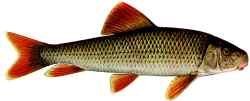
Not all of us have the luxury of leaving our work site to take a lunch break.  Today, I did and decided to take a quick adventure.  My husband and I ventured down to Winton, a small town near Ely, to watch the spawning white sucker fish in the Shagawa River.  If you watch closely you will see a redhorse sucker (redish colored fins) mixed in with the group in the video below.
white sucker fish


redhorse sucker fish


Suckers will spawn in spring in shallow water like under this bridge.  The females, larger in size, in this video swim sideways and backward down the river as they release the eggs.  The males, smaller in size and with stripes, "herd" the female, or cluster near her, and fertilize the eggs as they are released.  From up above it looks like a pile of fish.  Enjoy!


Learn more by visiting:
http://www.dnr.state.mn.us/fish/whitesucker.html

Neches River Bill

Senator Kay Bailey Hutchison (R-Texas) introduced a bill in the U.S. Senate, S. 2324, the Upper Neches Wild and Scenic River Study Act. If passed, the bill would authorize a formal study of the eligibility of a specific section of East Texas’ Neches River for designation as a National Wild and Scenic River. The National Park Service or the U.S. Forest Service would study this 225-mile section of the Neches River from the Lake Palestine dam in Anderson and Cherokee Counties to B.A.Steinhagen Lake in Jasper and Tyler Counties.

"The Neches River is one of Texas' most beautiful, free-flowing rivers and provides a vital habitat for fish and other aquatic animals," said Sen. Hutchison. "Its location in the heart of the Central Flyway makes it a crucial path for migrating ducks, geese, and songbirds. A Wild and Scenic River designation would help preserve all these attributes."

“The Neches River is a tremendous asset for Texans,” said Richard Donovan, author of Paddling the Wild Neches (Texas A&M University Press, 2006). “Senator Hutchison’s bill is the first step toward protecting its value for our children and our children’s children.” The Wild and Scenic Rivers Act allows for the identification of certain rivers in the United States which have outstanding qualities. There are about 200 rivers in the U.S. with wild and scenic status. Texas has one national river of this type, a section of the Rio Grande River bordering Big Bend National Park.

Tuesday, May 1, 2012

Quick Jillian Update

     Jillian had a port put in yesterday to receive chemotherapy through. The surgery went well, and she received her first dose of vincristine. Between it and the anesthesia she was having a rough time last night.  She is scheduled to receive injections on days 4, 8, 21, and 28. She is also on oral steroids.  So far her spinal tap is clear! Praise God!

    Today she is eating and looking good, so she may be able to go home next Monday.  Keep praying for them all as they have just started this journey!


  Previous Post on Jillian


TAMU Press Author Named AMU’s 2012 Distinguished Graduate

Former rancher and US Air Force officer, Thomas E. Alexander was named Distinguished Graduate by The American Military University in Virginia for this year. Alexander, and his co-author Dan K. Utley, are coauthors of the forthcoming book Faded Glory: A Century of Forgotten Military Sites in Texas, to be published by Texas A&M University Press.

Alexander was appointed professional historian to the Texas Historical Commission by Governor Rick Perry in 2003 and was reappointed in 2009. He received the National Society of the Daughters of the American Revolution National History Award Medal for his contribution to American History in 2007 and was commissioned an Admiral in the Texas Navy by Governor Perry for his service in preserving the history of Texas in 2008.

Alexander’s works have also received many other awards, including the San Antonio Conservation Society’s “Publication of the Year Award” in 2001 and the Rupert Richardson Award as the Best Book on West Texas History in 2006.

Alexander’s Distinguished Graduate award will be presented at the Gaylord National Hotel and Convention Center in Fort Washington, Maryland, on June 15, 2012.

Be on the lookout for Alexander’s two new books on Texas military history in the near future.